for students deciding whether to ask for a re-mark
Find the marks your examiner missed.
Upload your marked paper and its marking scheme. Second Marker checks every answer step by step and tells you which questions are worth sending back for a re-mark.
Re-marks usually cost money and the window to ask is short. A grade can go down after review too, though in England that happened to under 0.1% of challenged grades. Knowing which questions to send back is the hard part.
Which questions are worth sending back? Now you can tell.
On your own
- Twenty pages of your paper and a marking scheme, side by side
- Adding up the margin marks by hand to check the cover
- Guessing which answers the examiner rushed
- Paying for questions that come back the same, or lower
With Second Marker
- Every margin mark read and re-added against the cover total
- Each answer lined up with the scheme’s step marks, with your own line quoted
- A DISPUTE or SKIP stamp on every question, with the fee and the risk
- A printed filing sheet listing exactly what to apply for
It reads your answer book, red ink included.
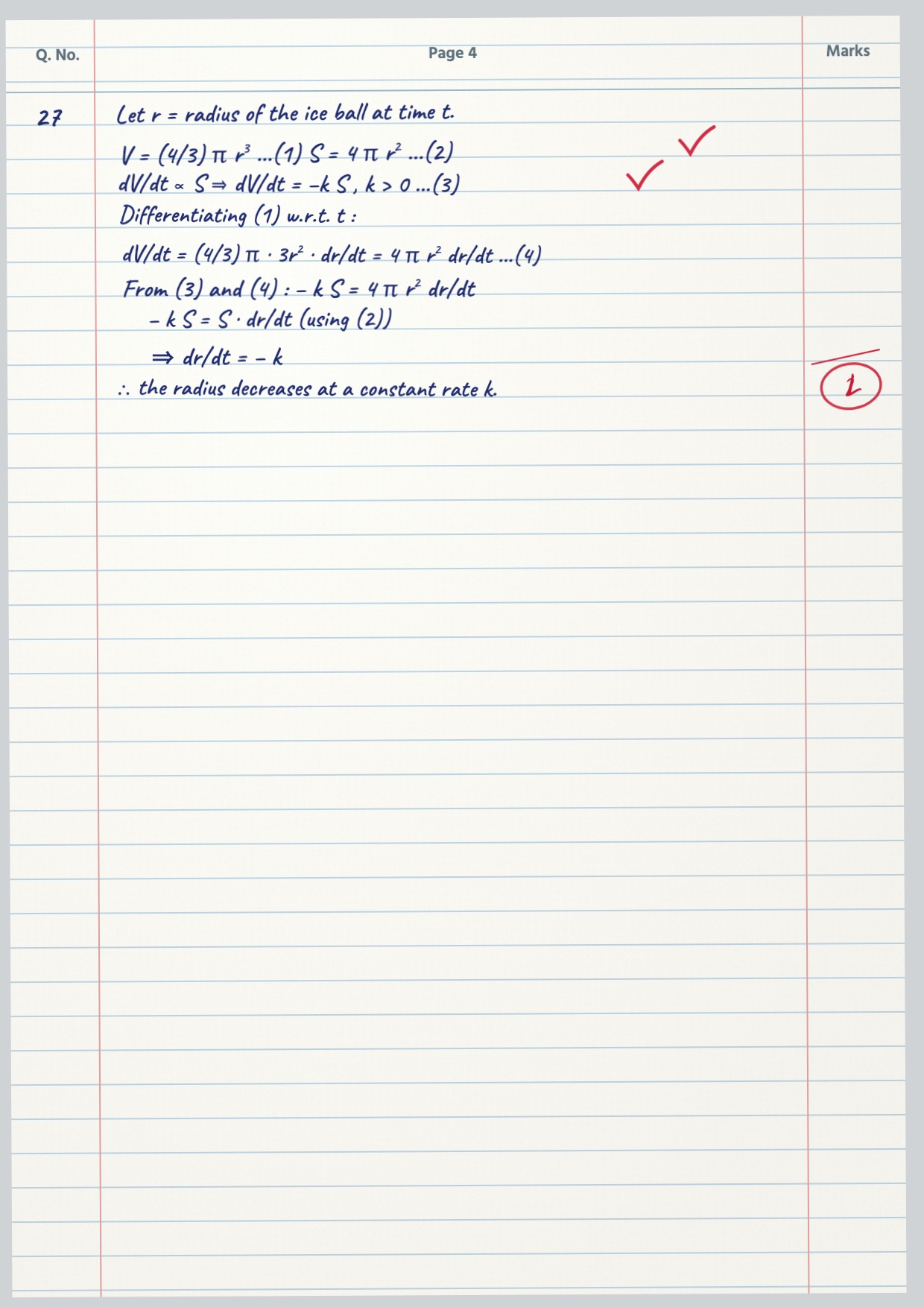
Your working is copied down line by line, and every mark the examiner wrote is read, including the total on the cover. If the margin marks don’t add up to that total, you’ll see it before anything else.
Each answer meets the official scheme.
Marking schemes and rubrics give marks for steps. Every step is marked credited, written but not credited, or not written, and your own line is quoted next to it.
Plain arithmetic decides what to dispute.
The possible gain, any fee or question limit, and the risk of losing marks are worked out by ordinary code you can read. If the examiner was already generous, it tells you to leave that question alone.
Steps from the scheme are on your page but weren’t given marks.
The marks match your working, or a second look could cost you.
What it does, and what it won’t.
Does it file the application for me?
No. You ask your exam board, school or university yourself. Second Marker gives you a sheet with the questions and the scheme steps to cite.
Can it promise my marks will go up?
No. The stamps are signals, not verdicts: they point at evidence on your own page and say how sure the reader was. Your examiners decide, and a re-mark can go either way.
Which exams does it work with?
It has been tested on one paper: CBSE Class 12 Mathematics 2025–26, with its official marking scheme typed in and checked by hand. For other exams you can paste your own marking scheme, rubric or answer key; that path is newer and less tested, so check its readings against your page.
What if my handwriting is hard to read?
It marks that question or page as unreadable and won’t stamp it DISPUTE. You’ll be asked to check it yourself.
What happens to my pages?
They’re turned into pictures on your device and sent to be read once. Nothing is saved, and closing the tab clears the results.
Should I still ask a teacher?
If you can, yes. Take the sheet with you: it points to the exact lines and scheme steps, so a teacher can check in a few minutes.